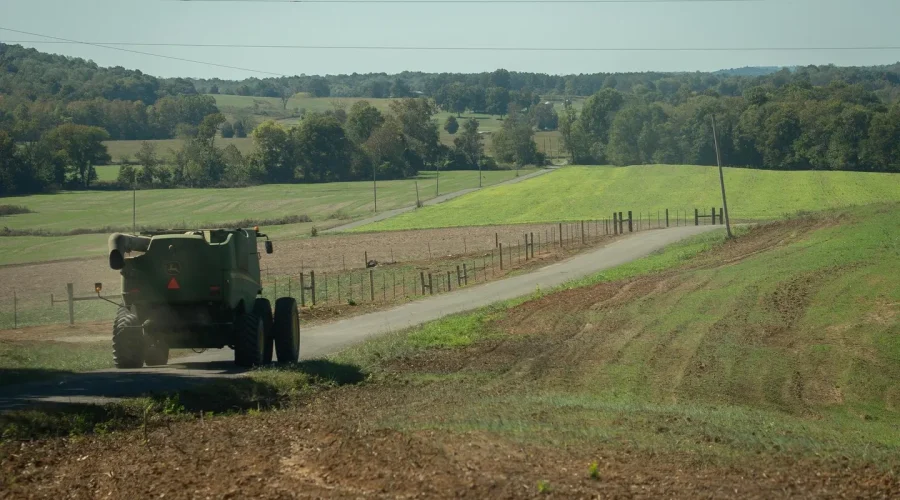
President Donald Trump announced a $12 billion aid package for farmers, offering much-needed financial assistance to a core constituency hit hard by the administration’s tariff policy, although members of the administration sought to connect recent struggles to Biden-era policies.
Up to $11 billion of the aid package will be allotted for an assistance program for farmers producing row crops, such as corn, wheat and soybeans, through a Farmer Bridge Assistance program.
Those funds will move by Feb. 28, 2026, Agriculture Secretary Brooke Rollins said at a roundtable with the president and Treasury Secretary Scott Bessent, but farmers will be informed how much they will receive earlier.
The other $1 billion will be reserved for farmers of other specialty crops, Rollins said, with Politico reporting this could include producers of crops like fruit and vegetable.
Rollins said the bridge funding was necessary because the “farm economy is facing a crisis that we inherited,” blaming the hardships faced by farmers on the Biden administration’s policies, including not signing new trade deals.
Trump also said the administration was planning to reduce environmental regulations on farming equipment, such as that produced by John Deere—insisting tractors and other machinery are getting too expensive and “it doesn’t do anything but make the machines break all the time.”
The funds will be authorized by the Commodity Credit Corporation Charter Act, Bloomberg reported, and will not require the administration to seek congressional approval to use tariff revenue to fund the bailout.
Trump repeatedly connected the payments to tariff income, insisting “this money would not be possible without tariffs.”
Trump will announce the aid package at a round table with Treasury Secretary Scott Bessent, Agriculture Secretary Brooke Rollins and members of Congress, according to the reports.
Earlier this year, soybean farmers bore the brunt of Trump’s tariff policy when China abruptly slashed their U.S. soybean purchases to zero as the two countries struggled to resolve a trade dispute over rare earth minerals. China was previously the largest single purchaser of American soybeans, and purchased about half of the U.S.’ $24.5 billion soybean crop in 2024. The Trump administration has been weighing options to address the crisis since the trade dispute began, including a reported plan to use tariff revenue for a slightly smaller bailout. China began importing American soybeans again in October ahead of a meeting between Trump and Chinese President Xi Jinping. After Trump struck a deal with Xi Jinping later the same month, the president claimed China would resume purchasing “massive amounts” of soybeans and other crops. Although the Trump administration said China would buy 12 million tons of soybeans before the end of the year, the country has not come close to meeting that mark as of late November, Reuters reported.
Big Number
About 60%. That’s how much farm bankruptcies rose in the first half of 2025 compared to the previous year, the Washington Post reported citing data from court records. A total of 181 farms across the country filed for bankruptcy in the first two quarters of the year, compared to 115 during the same two quarters in 2024.
Contra
In a statement to Forbes, the White House blamed the Biden administration for the recent increased hardship for farmers. “Farmers suffered for years under Joe Biden, who increased the United States’ trade deficit to over $1.2 trillion, raised input costs, pushed woke DEI agricultural policies, and more,” White House spokesperson Anna Kelly said in a statement. “Today’s announcement reflects the President’s commitment to helping our farmers, who will have the support they need to bridge the gap between Biden’s failures and the President’s successful policies taking effect,” Kelly said.